Rotary Rakes for Saskatchewan Hay and Forage Operations
Rotary rakes are especially useful for producers who want a cleaner windrow and more control over how hay is presented to the baler. Instead of dragging crop across the ground, rotary rakes use rotating arms and tines to gather forage more gently. This can be useful in alfalfa and higher-quality forage crops where leaf retention and clean feed matter.
In central and northern Saskatchewan, rotary rakes are commonly used by cattle producers, hay farms, and mixed farms where forage production is an important part of the operation. In southern Saskatchewan, they are useful for irrigated hay, alfalfa, straw, mixed forage, and livestock operations where reliable windrow formation is important.
Why Farmers Use Rotary Rakes
Farmers use rotary rakes when they want cleaner hay, better windrow shape, and more consistent feeding into the baler. A good windrow can make baling easier, reduce plugging, and improve bale consistency.
Common uses include:
- Raking grass hay, alfalfa, and mixed forage
- Creating clean windrows before baling
- Reducing dirt and ash content in the hay
- Improving baler pickup performance
- Handling heavier or uneven forage crops
- Raking hay more gently than some ground-driven options
- Preparing hay for round or square balers
Types of Rotary Rakes Available
Single-rotor rotary rakes are a good fit for smaller hay operations, acreages, and producers who want a simple, clean-raking machine. They are practical for smaller fields, lighter hay crops, and farms that want better windrow quality without moving into a larger rake.
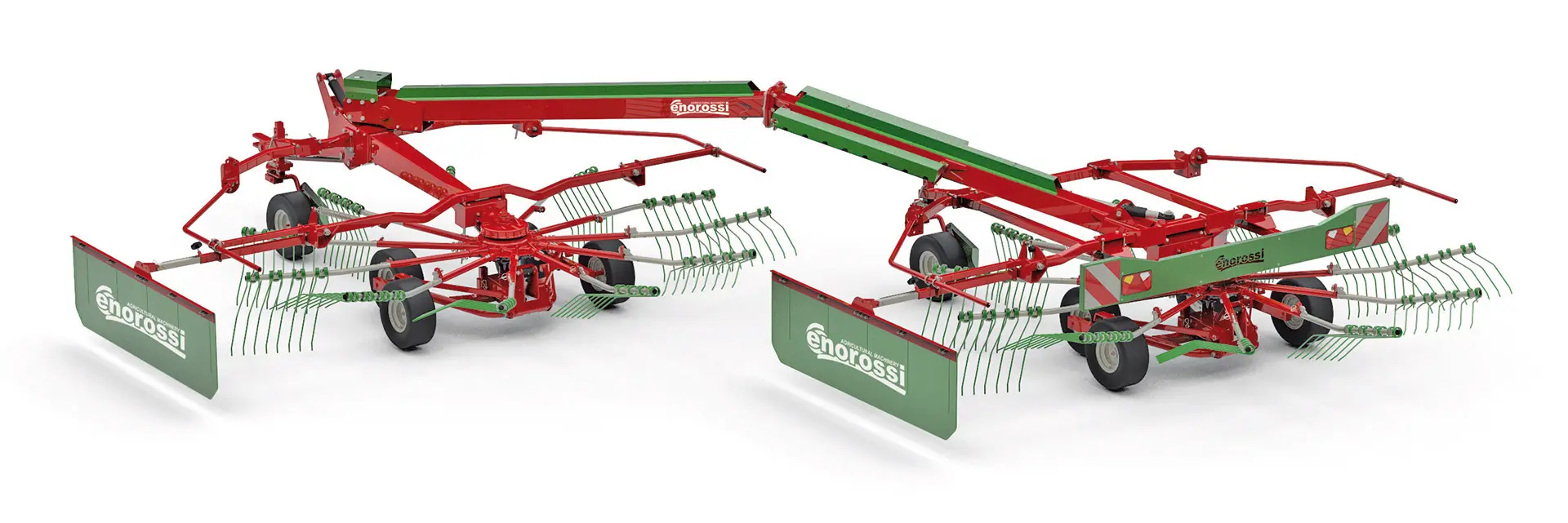
Twin-rotor rotary rakes are better suited for larger hay operations and producers who need more capacity. They can cover more ground and are useful when a farm needs larger or more consistent windrows for higher-volume baling.
Side-delivery rotary rakes move hay to one side and are commonly used where producers want a clean, controlled windrow.
Centre-delivery rotary rakes bring hay into a central windrow and are often used by larger producers who want efficient baler feeding and consistent row formation.
Where Rotary Rakes Are Used in Saskatchewan
Rotary rakes are used throughout Saskatchewan in hay fields, forage operations, ranches, and mixed farms. They are especially useful where hay quality matters and producers want to reduce soil contamination in the crop. For cattle operations, a rotary rake can be part of a haying system with a mower, tedder, and baler.
A rotary rake is not always the lowest-cost hay rake option. Wheel rakes are often more economical and can cover acres quickly, but rotary rakes are usually the better fit when crop quality, cleaner windrows, and gentler handling are priorities. For producers selling hay, feeding higher-quality forage, or working with alfalfa, the added control of a rotary rake can be worth the investment.
Choosing the Right Rotary Rake
The right rotary rake depends on field size, hay volume, tractor horsepower, crop type, and the type of baler being used. Smaller farms may be well served by a single-rotor rake, while larger hay producers may prefer a twin-rotor model for more capacity and consistent windrow formation. The main goal is to match the rake to the operation’s crop volume, field size, and baling setup.
Agri-Can Supply works with dealers across Western Canada to supply rotary rakes for Saskatchewan hay farms, ranches, mixed farms, and livestock operations.